
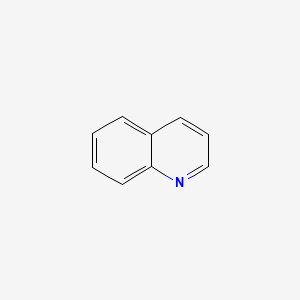
CAS · 91-22-5
Product Overview
Quinoline is a high-purity pharmaceutical-intermediates supplied for industrial and specialty chemical applications. Contact our team for specifications, packaging options and lead times.
Product Specifications
| Appearance | Little yellow transparent liquid |
|---|---|
| Purity (GC) | 98% min |
| Isoquinoline | 1.5% max |
| Moisture | 1% max |
| Color (APHA) | 50 max |
Applications
1. Pharmaceutical Intermediate
Quinoline is a key building block in the synthesis of numerous pharmaceutical compounds, including:
Antimalarials: e.g., Chloroquine, Amodiaquine
Antibacterials: Fluoroquinolones (e.g., Ciprofloxacin)
Antitumor and anti-inflammatory drugs
Derivatives of quinoline are also explored for antiviral, antifungal, and CNS-related applications.
2. Dye and Pigment Manufacturing
Quinoline is used as a precursor in the synthesis of azo dyes, quinoline yellow, and other colorants for textiles, inks, and coatings.
3. Agrochemicals
Serves as an intermediate for herbicides, fungicides, and plant growth regulators.
Quinoline moieties help improve lipophilicity and bioactivity in crop protection agents.
4. Corrosion Inhibitors
Quinoline derivatives are used in metal protection formulations, particularly for acid pickling inhibitors in the oil and gas industry.
5. Organic Synthesis
Acts as a ligand in coordination chemistry and starting material for complex heterocyclic compounds.
Used in research and industrial synthesis of fine chemicals.
6. Fuel Industry
Naturally occurs in coal tar and can be isolated for further use.
Found in trace amounts in fossil fuels; sometimes used as a model nitrogen compound in fuel desulfurization and denitrogenation studies.
Benefits
✅ Versatile Chemical Scaffold
The bicyclic aromatic system makes quinoline highly reactive for functionalization, suitable for developing a wide range of bioactive compounds.
✅ Pharmacological Importance
The quinoline core is part of many clinically important drugs with antimalarial, antibiotic, and anticancer properties.
✅ Industrial Relevance
Its use spans chemical synthesis, dye production, metal treatment, and agrochemical formulations.
✅ Well-Studied Compound
Due to its long-standing availability and ease of derivatization, quinoline is widely used in academic research and structure-activity relationship (SAR) studies.
Conclusion
Quinoline (CAS 91-22-5) is a highly valuable heterocyclic compound with wide-ranging applications in pharmaceuticals, dyes, agrochemicals, and industrial chemistry. Its ability to serve as a core scaffold in bioactive molecules and its role in complex synthesis make it indispensable across scientific and manufacturing domains.
Previous
Ethyl Trifluoroacetate丨CAS 383-63-1
Next