
N-Ethoxycarbonyl-2-ethoxy-1,2-dihydroquinoline
CAS 16357-59-8
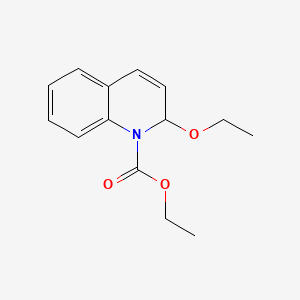
CAS · 16357-59-8
Product Overview
N-Ethoxycarbonyl-2-ethoxy-1,2-dihydroquinoline is a high-purity pharmaceutical-intermediates supplied for industrial and specialty chemical applications. Contact our team for specifications, packaging options and lead times.
Product Specifications
| Property | Specification |
|---|---|
| Appearance | Off-white to white crystalline powder |
| Purity (HPLC) | 99.0% min |
| Melting Point | 62.0-67.0°C |
| Loss on Drying | 0.5% max |
Applications
1. Organic Synthesis
● Building block for complex molecules: N-Ethoxycarbonyl-2-ethoxy-1,2-dihydroquinoline丨CAS 16357-59-8 is used as a precursor in the synthesis of other quinoline derivatives and complex organic molecules. The functional groups attached to the quinoline ring make it an ideal intermediate for further chemical modifications, such as coupling reactions or substitution reactions.
● Pharmaceutical chemistry: Quinoline-based compounds are often evaluated for medicinal properties, including their antimicrobial, anticancer, and anti-inflammatory activities. N-Ethoxycarbonyl-2-ethoxy-1,2-dihydroquinoline may be used in the synthesis of potential drug candidates.
2. Medicinal Chemistry
● Antimalarial research: Quinoline derivatives are a known class of antimalarial agents. Although this specific compound has not been directly linked to malaria treatment, quinoline-based drugs (like chloroquine) are heavily studied, and derivatives like N-Ethoxycarbonyl-2-ethoxy-1,2-dihydroquinoline could serve as precursors for the development of new antimalarial treatments.
● Anticancer and antiviral properties: Quinoline derivatives have been shown to exhibit anticancer and antiviral properties, and this compound could play a role in the development of therapies targeting various diseases, including viruses and cancerous cells.
3. Material Science and Polymer Chemistry
● Functionalized polymers: Quinoline derivatives can also be incorporated into polymer systems to modify their properties, such as electron transport or optical characteristics. N-Ethoxycarbonyl-2-ethoxy-1,2-dihydroquinoline may be useful in the development of polymers for electronic applications, such as organic semiconductors or light-emitting devices.
● Ligands for metal complexes: The nitrogen atom in the quinoline ring and the electron-donating nature of the ethoxy groups make this compound useful as a ligand in coordination chemistry, potentially forming stable metal complexes that could be utilized in catalysis or other material science applications.
4. Agricultural Chemistry
● Pesticide development: Quinoline derivatives have been explored for their antimicrobial and insecticidal properties. N-Ethoxycarbonyl-2-ethoxy-1,2-dihydroquinoline could serve as a precursor in the development of agrichemicals, such as pesticides or fungicides.
● Herbicide research: Quinoline and its derivatives are sometimes considered for use as herbicides due to their ability to interact with plant metabolic pathways. This compound may play a role in developing compounds that can control weed growth without harming crops.
Benefits
1. Versatile Chemical Intermediate
N-Ethoxycarbonyl-2-ethoxy-1,2-dihydroquinoline丨CAS 16357-59-8 is a highly versatile intermediate that can be used in the synthesis of a variety of complex organic molecules. Its functional groups make it a suitable building block for pharmaceuticals, polymers, and materials science applications.
2. Potential in Drug Development
The quinoline backbone is a well-established structure in drug discovery, especially for antimicrobial, antiviral, and anticancer agents. N-Ethoxycarbonyl-2-ethoxy-1,2-dihydroquinoline could contribute to the design of new therapeutic molecules with improved efficacy and selectivity for targeting specific diseases.
3. Application in Polymer and Material Science
This compound can also be used in polymer science to create materials with novel properties, such as electronic conductivity or light emission. Its ability to form metal complexes opens up potential applications in catalysis, as well as optical and electronic devices.
4. Environmental and Agricultural Applications
Given the increasing demand for eco-friendly and biodegradable chemicals in agriculture, N-Ethoxycarbonyl-2-ethoxy-1,2-dihydroquinoline could contribute to sustainable agriculture by acting as a precursor in the synthesis of less toxic pesticides and herbicides.
Previous
Pentafluorophenol丨CAS 771-61-9
Next
Conclusion
A concise summary and suitability assessment for this product is available on request. Contact our team to discuss whether it fits your process and quality requirements.