
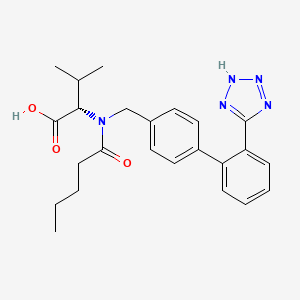
CAS · 137862-53-4
Product Overview
Valsartan is a high-purity a-api supplied for industrial and specialty chemical applications. Contact our team for specifications, packaging options and lead times.
Product Specifications
| Grade | USP43 grade |
|---|---|
| Appearance | White or off white powder |
| Assay (HPLC) | 98%–102% |
| Solubility | Very soluble in methanol and ethanol. Sparingly soluble in chloroform, practically insoluble in water |
| Identification | IR, HPLC |
| Absorbance | 0.02 at 420 nm (1/20 in methanol) max |
| Water | 2% max |
| Residue on ignition | 0.1% max |
| Heavy metals | 0.001% max |
| NDMA | 0.02 ppm max |
| NDEA | 0.02 ppm max |
| Related compounds | Related compound A: 1.0% max Related compound B: 0.2% max Related compound C: 0.1% max Any other individual impurity: 0.1% max Total impurity: 0.3% max |
| Residual solvents (GC) | Hexanes: 290 ppm max Ethyl acetate: 5000 ppm max Methylene chloride: 600 ppm max Xylene (mixture): 2170 ppm max |
Applications
Valsartan is an angiotensin II receptor blocker (ARB) widely used in the treatment of cardiovascular conditions. It is primarily prescribed for managing hypertension, heart failure, and reducing the risk of cardiovascular events such as stroke and myocardial infarction. By selectively blocking the angiotensin II type 1 (AT1) receptor, valsartan prevents vasoconstriction and aldosterone secretion, leading to relaxation of blood vessels, reduced blood pressure, and decreased cardiac workload. It is also used in patients with left ventricular dysfunction following a heart attack, where it helps improve survival and reduce complications. In clinical practice, valsartan may be used alone or in combination with other antihypertensive agents such as diuretics or calcium channel blockers to achieve optimal therapeutic outcomes.
Benefits
The benefits of valsartan stem from its efficacy, tolerability, and targeted mechanism of action. Unlike ACE inhibitors, which also affect bradykinin metabolism and may cause persistent cough or angioedema, valsartan provides blood pressure control with a lower risk of these side effects. It offers consistent 24-hour blood pressure reduction with once-daily dosing, enhancing patient compliance. Beyond lowering blood pressure, it protects the heart and kidneys by reducing strain on the cardiovascular system and slowing the progression of kidney damage in patients with diabetes or hypertension. Clinical evidence supports its role in improving survival in heart failure and post-myocardial infarction patients, making it a cornerstone therapy in long-term cardiovascular management.
Conclusion
Valsartan (CAS 137862-53-4) is a clinically important ARB that provides effective and well-tolerated treatment for hypertension, heart failure, and cardiovascular risk reduction. Its targeted receptor-blocking action ensures reliable control of blood pressure and protection of vital organs with fewer side effects compared to other therapies. With its proven safety profile and broad therapeutic benefits, valsartan remains a key option in modern cardiovascular care.
Previous
Next