
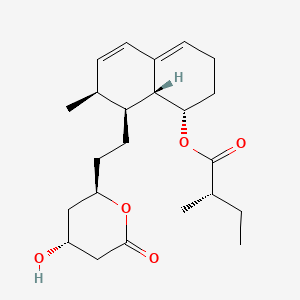
CAS · 73573-88-3
Product Overview
Mevastatin is a high-purity a-api supplied for industrial and specialty chemical applications. Contact our team for specifications, packaging options and lead times.
Product Specifications
| Appearance: | White to slight yellow crystal powder |
|---|---|
| Assay (Dried): | 95% min |
| Solubility: | Soluble in chloroform, slightly soluble in methanol |
| Specific rotation: | +265 to 290 deg |
| Loss on drying: | 0.5% max |
| Residue on ignition: | 0.1% max |
| Heavy metals: | 20 ppm max |
| Residual solvent: | |
| Acetone: | 2000 ppm max |
| Toluene: | 89 ppm max |
| N-hexane: | 290 ppm max |
| Related substances: | |
| Total impurities: | 3.0% max |
| Maximum single impurity: | 0.6% max |
| Dehydro-mevastatin: | 2.0% max |
| Impurity A: | 0.15% max |
Applications
1. Cholesterol-Lowering Medication
● HMG-CoA Reductase Inhibitor: Mevastatin丨CAS 73573-88-3 functions as an inhibitor of HMG-CoA reductase, an enzyme that plays a key role in the synthesis of cholesterol in the liver. By inhibiting this enzyme, mevastatin reduces cholesterol production, specifically lowering levels of low-density lipoprotein (LDL) or "bad" cholesterol.
● Hyperlipidemia Treatment: Mevastatin was one of the first statin drugs used to treat hyperlipidemia (high cholesterol). It is effective in reducing the risk of atherosclerosis, heart attacks, and strokes associated with high cholesterol levels. Although it is not widely used today due to the availability of more potent statins, it remains an important compound for understanding statin therapy.
2. Research and Development in Cardiovascular Disease
● Statin Research: Mevastatin is used extensively in pharmacological research and preclinical studies to investigate cholesterol metabolism, cardiovascular health, and the role of HMG-CoA reductase in various diseases. Its cholesterol-lowering properties have made it a critical component in the development of newer, more effective statins, including atorvastatin, simvastatin, and rosuvastatin.
● Mechanism of Action Studies: Scientists continue to use mevastatin to explore the mechanism of action of statins, their impact on endothelial function, inflammation, and oxidative stress, and their potential pleiotropic effects beyond cholesterol lowering.
3. Antioxidant and Anti-Inflammatory Properties
● Potential Antioxidant Effects: Some research has suggested that mevastatin, like other statins, may have antioxidant properties that contribute to vascular health. Statins can help reduce oxidative stress in blood vessels, which may protect against atherosclerosis and cardiovascular disease.
● Anti-Inflammatory Effects: Mevastatin丨CAS 73573-88-3 has been studied for its anti-inflammatory properties, which might play a role in reducing the inflammatory processes involved in heart disease. Inflammation is a key contributor to the development of plaque buildup in arteries, and mevastatin's ability to modulate cytokine production may help prevent arterial inflammation.
4. Role in Cancer Research
● Cancer Prevention Studies: Some studies have suggested that mevastatin and other statins might have potential anticancer effects, particularly in the context of breast cancer, liver cancer, and prostate cancer. The mechanism by which mevastatin may inhibit cancer cell growth involves its effects on cholesterol synthesis and cell membrane integrity, although further research is needed to confirm these potential uses.
5. Antifungal Research
● Antifungal Agent (Precursor Compound): Mevastatin is produced by the fungus Penicillium citrinum, and early studies also suggested its use as an antifungal compound. While it is primarily known for its cholesterol-lowering effects, mevastatin and its derivatives have been explored in fungal biology and antifungal drug development.
Benefits
1. Cholesterol-Lowering Effects
● Primary Benefit: The most well-known benefit of Mevastatin丨CAS 73573-88-3 is its ability to lower total cholesterol and LDL cholesterol. By inhibiting the enzyme HMG-CoA reductase, it reduces the liver's production of cholesterol, leading to a reduction in plaque formation and a lower risk of atherosclerosis and cardiovascular diseases.
2. Cardiovascular Disease Risk Reduction
● Statins like mevastatin help reduce the risk of heart attack, stroke, and coronary artery disease by lowering cholesterol levels. Mevastatin has historically been used in patients with hyperlipidemia, angina, and those at high risk of cardiovascular events.
3. Pleiotropic Effects
● Beyond cholesterol reduction, statins like mevastatin have been shown to have pleiotropic effects, such as improving vascular health, reducing inflammation, and offering antioxidant protection. These benefits make mevastatin effective in addressing multifactorial cardiovascular risk beyond simple cholesterol reduction.
4. Accessibility in Research
● Research Tool: Mevastatin serves as an essential tool for studying the mechanisms of cholesterol biosynthesis and HMG-CoA reductase inhibition. Its historical role as the first statin drug makes it a critical compound in understanding the broader effects of statins in various diseases, including hyperlipidemia and heart disease.
5. Potential Cancer and Antifungal Applications
● Cancer Research: There is growing interest in mevastatin's anticancer properties, particularly for its potential to inhibit cancer cell growth and metastasis. The exact mechanism of action remains unclear but is related to its effects on cell membrane structure and cholesterol metabolism.
● Antifungal Properties: The compound's antifungal properties, while less studied, suggest potential applications in treating certain fungal infections, although it is not used as a primary antifungal agent.
Conclusion
Mevastatin丨CAS 73573-88-3 is a natural statin with a primary role in cholesterol-lowering therapies, particularly for treating hyperlipidemia and preventing cardiovascular diseases. As an HMG-CoA reductase inhibitor, it has been instrumental in advancing the understanding and development of statin drugs. While it is not widely used in clinical practice today due to the availability of more potent statins, mevastatin remains important in cardiovascular research and the development of new therapeutic strategies. Additionally, emerging studies suggest it may have anticancer and anti-inflammatory effects, further expanding its potential benefits.
Previous
Next
Conclusion
A concise summary and suitability assessment for this product is available on request. Contact our team to discuss whether it fits your process and quality requirements.