
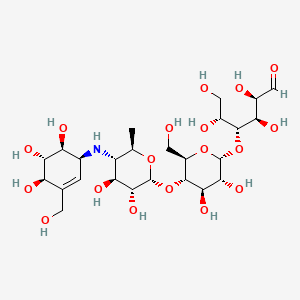
CAS · 56180-94-0
Product Overview
Acarbose is a high-purity a-api supplied for industrial and specialty chemical applications. Contact our team for specifications, packaging options and lead times.
Product Specifications
| Grade | EP10.0 |
|---|---|
| Appearance | White or yellowish amorphous powder |
| Assay | 95.0% to 102.0% |
| Identification (IR) | The spectrum of sample should be identical with that of reference standard |
| Identification (HPLC) | Should be consistent with the retention time and shape of principal peak of reference solution |
| Specific Optical Rotation | +168° to +183° |
| Water | 4.0% max |
| Sulphated Ash | 0.2% max |
| Heavy Metals | 20 ppm max |
| pH | 5.5 to 7.5 |
| Absorbance (At 425nm) | 0.15 max |
| Impurity A | 0.6% max |
| Impurity B | 0.5% max |
| Impurity C | 1.5% max |
| Impurity D | 1.0% max |
| Impurity E | 0.2% max |
| Impurity F | 0.3% max |
| Impurity G | 0.3% max |
| Other Impurity | 0.2% max |
| Total Impurities | 3.0% max |
| Total viable aerobic | 1000 cfu/g max |
| Mould yeast | 100 cfu/g max |
| Escherichia coli | Not detected |
Applications
Acarbose is a pharmacologically active compound primarily used in the management of type 2 diabetes mellitus. It functions as an alpha-glucosidase inhibitor, slowing down the enzymatic breakdown of carbohydrates in the small intestine. By doing so, it helps reduce postprandial hyperglycemia, or spikes in blood glucose after meals. Acarbose is commonly administered orally as part of a comprehensive diabetes management plan that includes diet control, exercise, and other antidiabetic medications. Beyond its use in humans, it is sometimes explored in veterinary medicine for managing hyperglycemia in animals. The compound's capacity to modulate carbohydrate digestion also makes it relevant in clinical research for studying glycemic responses, insulin resistance, and metabolic syndrome.
Benefits
The benefits of acarbose arise from its unique mechanism of action and favorable safety profile. By delaying carbohydrate absorption, it contributes to smoother blood glucose curves, reducing the risk of acute hyperglycemic episodes and long-term complications associated with type 2 diabetes, such as cardiovascular disease and neuropathy. It does not stimulate insulin secretion, which minimizes the risk of hypoglycemia when used alone, making it suitable for a broad range of patients. Additionally, acarbose may have beneficial effects on body weight management and lipid profiles, indirectly supporting metabolic health. Its use has also been associated with positive effects on gut microbiota due to increased delivery of undigested carbohydrates to the colon, which may further influence metabolic regulation. These properties position acarbose as an effective adjunctive therapy that complements lifestyle interventions and other pharmacological treatments.
Conclusion
In conclusion, acarbose is a valuable therapeutic agent for controlling postprandial blood glucose levels and supporting overall metabolic health in individuals with type 2 diabetes. Its applications in clinical practice and research demonstrate its versatility in managing glycemic control and investigating carbohydrate metabolism. The benefits of smoother glucose regulation, low risk of hypoglycemia, and potential positive effects on weight and lipid metabolism make acarbose an important option within comprehensive diabetes management strategies. Its continued use and study contribute to improving patient outcomes and enhancing understanding of metabolic interventions.
Previous
Next