
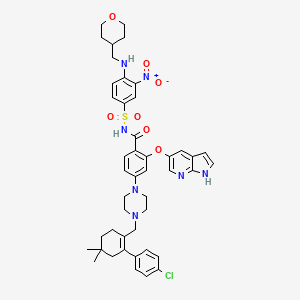
CAS · 1257044-40-8
Product Overview
ABT-199 is a high-purity a-api supplied for industrial and specialty chemical applications. Contact our team for specifications, packaging options and lead times.
Product Specifications
| Characteristics | Yellowish to deep yellow powder |
|---|---|
| Assay (on dried basis) | 98 to 102% |
| Identification | The UV absorption spectrum exhibits maxima at 285±2nm The infrared absorption spectrum of sample corresponds to that of referenced substance The retention time of the major peak in the chromatogram of the assay preparation corresponds to that in the chromatogram of the standard preparation, as obtained in the assay |
| Loss on drying | 0.5% max |
| Residue on ignition | 0.1% max |
| Heavy metals | 0.002% max |
| Related substances | Max single impurity: 0.1% max Total impurities: 1% max |
| Residual solvent | Tetrahydrofuran: 720ppm max MeOH: 3000ppm max Ethyl acetate: 5000ppm max Dioxane: 5000ppm max Dichloromethane: 600ppm max |
Applications
1. Cancer Treatment
Chronic Lymphocytic Leukemia (CLL): Approved as a first-line or relapse therapy, especially effective in patients with 17p deletion or TP53 mutation, who have poor prognosis with standard chemotherapy.
Acute Myeloid Leukemia (AML): Used in combination with azacitidine, decitabine, or low-dose cytarabine in older adults unfit for intensive chemotherapy.
Small Lymphocytic Lymphoma (SLL): Shares treatment protocols with CLL due to similar pathology.
Non-Hodgkin Lymphomas: Being explored in mantle cell lymphoma (MCL), follicular lymphoma (FL), and diffuse large B-cell lymphoma (DLBCL).
2. Combination Therapies
Venetoclax is part of numerous combination regimens, showing synergistic effects with:
Hypomethylating agents (e.g., azacitidine)
BTK inhibitors (e.g., ibrutinib)
Anti-CD20 monoclonal antibodies (e.g., rituximab, obinutuzumab)
These combinations improve response rate, overall survival, and duration of remission.
3. Research and Development
Used as a tool compound in cancer research to study:
Apoptosis pathways
Mitochondrial membrane permeability
Resistance mechanisms in tumors
A valuable molecule in preclinical and translational studies to evaluate BCL-2 family interactions and drug resistance.
Benefits
✅ Highly Selective BCL-2 Inhibition
Targets only BCL-2, sparing BCL-XL and MCL-1, which minimizes platelet toxicity and off-target effects.
Promotes apoptosis in BCL-2-dependent cancer cells, especially in hematologic malignancies.
✅ Oral Administration
Convenient once-daily oral tablet, improving patient compliance over injectable regimens.
✅ Effective in High-Risk Populations
Particularly beneficial for patients with high-risk genetic mutations or those resistant to chemoimmunotherapy.
✅ Rapid Response with Deep Remission
Induces deep molecular responses, including minimal residual disease (MRD) negativity in some CLL cases.
✅ Customizable Dosing
Dosing can be tailored with gradual ramp-up schedules to reduce the risk of tumor lysis syndrome (TLS)-a potential side effect of rapid cancer cell death.
✅ Good Safety Profile
Side effects are generally manageable and reversible, especially when used with proper ramp-up protocols and prophylaxis.
Conclusion
ABT-199 (Venetoclax, CAS 1257044-40-8) represents a major advancement in targeted cancer therapy, particularly in the treatment of CLL, AML, and other BCL-2 dependent hematologic malignancies. Its selectivity, oral bioavailability, and potent pro-apoptotic activity make it a breakthrough therapy with broad application in both clinical and research settings. As new combination regimens emerge, Venetoclax continues to shape the landscape of precision oncology and offers new hope for patients with hard-to-treat blood cancers.
Previous
L-Lysine Monoacetate丨CAS 57282-49-2
Next